

Temporomandibular joint rehabilitation
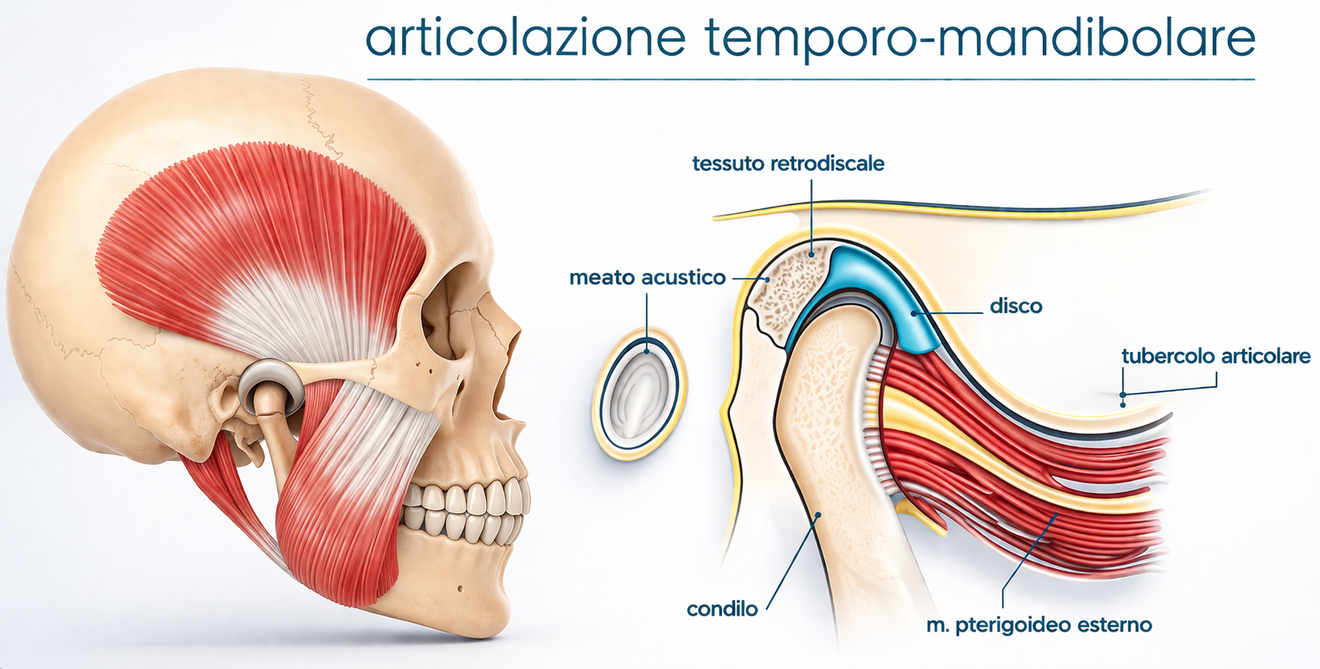
What is the temporomandibular joint (TMJ)?
The temporomandibular joint is one of the most complex joints in the body: it connects the jaw to the skull and allows us to speak, chew, swallow and make facial expressions.
Temporomandibular joint disorders: causes and symptoms
When there are functional disorders of the masticatory muscles and/or movement impairments, temporomandibular joint movement itself is affected, causing various types of problems. The most common symptoms of disorders affecting this joint are:
fatigue when chewing, yawning or simply opening the mouth
joint pain, both at rest and during use (for example, when eating or speaking)
joint noises when opening or closing the mouth: clicks, crackling or a sandy sound
limited and/or stiff mouth opening, up to complete locking
dull facial pain with tension in the facial expression and chewing muscles
headaches: tension-type and muscle-tension headaches
feeling of facial stiffness
tension extending from the neck to the head, with difficulty moving
ear pain that may radiate to the face
tinnitus (ringing in the ears)
hearing loss and dizziness
T.M.J. pain when resting your head on a pillow
Problems associated with temporomandibular joint disorders
Temporomandibular joint disorders can lead to various problems, often related to the symptoms listed above.
Here are the most common dysfunctions:
- reduced mouth opening or difficulty performing certain movements
- joint noises when moving
- difficulty eating and speaking
- headache or earache
- tension in the chewing muscles
- impaired chewing
Causes of temporomandibular joint disorders
There are many causes of TMJ disorders. Here are the most common:
teeth grinding or clenching (bruxism)
joint injuries,
such as fractures of the condyle and jaw
whiplash
inflammatory conditions such as osteoarthritis
or arthritis
misaligned bite
very stressful physical and mental situations.
the treatments
Care and treatment for temporomandibular joint disorders
In many cases, pain, headaches and other symptoms associated with temporomandibular joint disorders can improve quickly when treated early.
Physical therapy aims to restore balance between the jaw and head through muscle and joint rehabilitation. Physiotherapy rehabilitation uses specific treatments:
Manual lymphatic drainage
Known as lymphatic drainage, this treatment is particularly useful for facial swelling caused, for example, by lymphatic fluid retention associated with parafunctional habits such as teeth grinding.
Decontracting massage therapy
Manual therapy using a range of massage techniques to relieve muscle tightness in the muscles used for chewing and facial expression, as well as the neck, and deactivate any trigger points that may be causing pain.
Exercises and functional recovery techniques
These exercises are designed to restore chewing function. They are performed under the close, direct supervision of a specialist. The patient then learns to maintain the results achieved by doing exercises independently at home.
Postural re-education
These are posture-correction exercises which, combined with proper breathing exercises, complement TMJ physiotherapy when poor posture is present.
FAQs on temporomandibular rehabilitation
Frequently asked questions
What is temporomandibular re-education?
A targeted physiotherapy programme to restore proper temporomandibular joint function, improve movement and posture, and reduce pain and tension.
What are the most common symptoms of TMD?
Symptoms include jaw or facial pain, headaches, joint noises (clicking), difficulty opening the mouth, dizziness and neck tension.
What causes temporomandibular joint disorders?
They can result from bruxism, bite problems, injuries, joint inflammation or prolonged stress.
Can physiotherapy help with T.M.J. disorders?
Yes, physiotherapy is essential for restoring balance to muscle and joint function, reducing pain and improving jaw mobility.
What treatments are used in temporomandibular re-education?
Manual techniques, massage therapy, lymphatic drainage, specific exercises and postural re-education are used to restore function.
Should I also do the exercises at home?
Yes. After an initial period of guided treatment, patients learn exercises to do on their own to maintain and consolidate their results over time.
Book an appointment or request information
Whether you are looking for a specialist physiotherapy program or would like more information about teaching activities, Dr. Anna Barbera’s website is designed to help you find clear answers and a reliable professional resource. In the contact section, you can find locations, contact details and how to request an appointment.
VAT No.: 01611240183
info@annabarbera.it
Locations and contact details
Dr. Anna Barbera works at several locations to provide accessible, professional care.
Choose the nearest location and book your appointment.


