

MAXILLOFACIAL POST-SURGICAL REHABILITATION
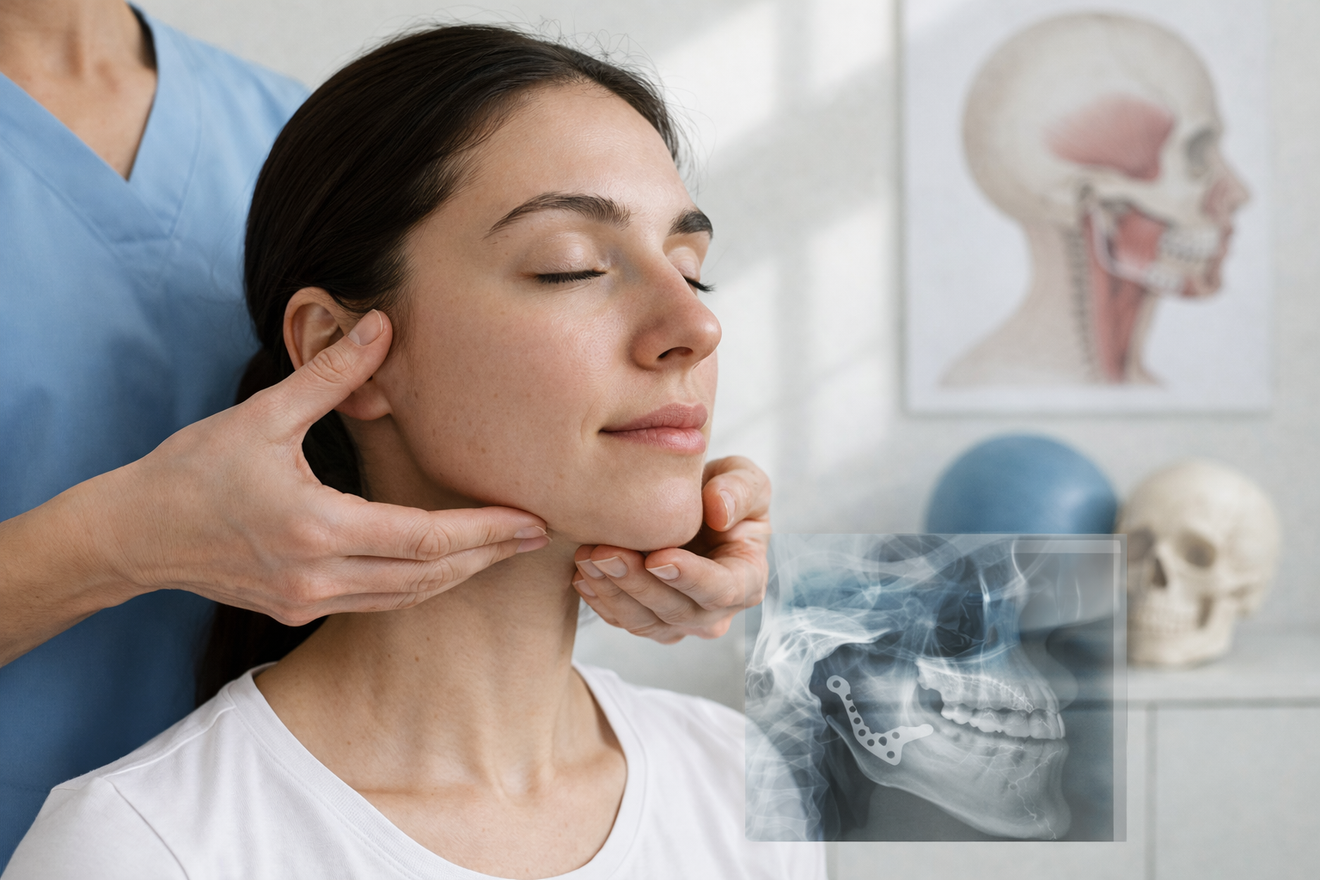
What does post-surgical re-education involve
Post-surgical maxillofacial rehabilitation is an essential physiotherapy program that promotes recovery after surgery involving the face and jaw.
Targeted treatment can reduce pain, swelling and stiffness, progressively improving the patient’s function and quality of life.
When post-surgical rehabilitation is recommended
Physiotherapy helps manage the effects of surgery and supports a faster, more effective recovery. This treatment is recommended after maxillofacial surgery, such as:
Joint Aspiration and Arthroscopy
Open surgery (discectomy and disc repositioning)
Tumors
Trauma and reconstructive surgery
Orthognathic surgery
Complex tooth extractions
Oral surgery
Surgery on the mandible or maxilla
Treatment goals
Post-surgical rehabilitation aims to support patients as they regain function, addressing several aspects:
- Reduced pain and swelling
- Restoring jaw mobility
- Improved chewing function
- Reduced muscle tension
- Preventing stiffness and permanent limitations
the treatments
How the rehabilitation program works
Physiotherapy rehabilitation for surgical patients is extremely useful both before and after surgery.
Treatment is always tailored to the type of surgery and the patient’s condition.
During sessions, Dr. Anna Barbera uses a range of physiotherapy techniques to support a gradual and safe recovery.
Manual lymphatic drainage
Useful for reducing post-operative edema and swelling by promoting fluid drainage.
Decontracting massage therapy
Helps relax the muscles and reduce tension caused by the procedure.
Mobilization exercises
They help progressively restore jaw movement.
Guided functional exercises
They help patients restore proper chewing and joint function.
FAQ Publications and articles
Frequently asked questions
What does post-surgical maxillofacial rehabilitation involve?
This is a personalized physiotherapy program that helps restore function in the jaw and facial area after surgery.
When should I start physiotherapy after surgery?
Treatment begins according to the surgeon’s instructions, generally in the early post-operative stages, to promote a faster and more effective recovery.
What are the benefits of post-surgical rehabilitation?
It helps reduce pain, swelling and stiffness, improving jaw mobility, chewing function and quality of life.
After which procedures is rehabilitation recommended?
It is recommended after orthognathic surgery, complex extractions, oral surgery, injuries, or surgery on the mandible or maxilla.
What does the rehabilitation programme involve?
Treatment is tailored to each patient and may include lymphatic drainage, massage therapy, mobility exercises and guided functional exercises.
Should I also do the exercises at home?
Yes, patients are guided in learning specific exercises to do independently to maintain and improve their results.
Book an appointment or request information
Whether you are looking for a specialist physiotherapy program or would like more information about teaching activities, Dr. Anna Barbera’s website is designed to help you find clear answers and a reliable professional resource. In the contact section, you can find locations, contact details and how to request an appointment.
VAT No.: 01611240183
info@annabarbera.it
Locations and contact details
Dr. Anna Barbera works at several locations to provide accessible, professional care.
Choose the nearest location and book your appointment.


